
Introduction to The Professional Goals Template
Template-(1) A system that helps you arrange information on a computer screen. (2) Something that serves as a model for others to copy.
Introduction
Ideally, at this point, you have determined all your professional goals. You reached this point by brainstorming all the ideas you may have had about what you potentially want to do in your career. You then took time to reflect (ponder) on them during your quiet time. Perhaps you ran them by your mentor or spouse and, after a period of time, concluded what you want to do in your professional work life. Remember that I define a professional slightly differently from the standard definition. My definition, which I define clearly for you in my book (Note 3) can encompass any field of work and is more related to the quality that results in work performed at a high level. This is the level you want to perform at. No slacking or taking it easy. Because you want to achieve all of your dreams, it will take hard work for the rest of your working life. I presume you understand and accept that, given you have followed me to this point. Remember that you are entering into a special place where few others go. You are now in the 3% club and working your way to the 1% club. That’s a wonderful feeling!
You then placed all of your professional goals in the priority matrix, and you have a clear idea of what you want your career to look like from now until you retire and beyond. Just to say it again (you know I like to repeat points to ensure they sink in, ha!), I hope you have, or will, also discuss these goals with your mentor and spouse if you have not already. It’s always a good idea to seek input from people you trust for things like this, to see if you missed something, or what you have listed is in general alignment with what kind of person you are and your station in life. For example, if you are 50 years old and you stated you wanted to retire from your job as a waiter and go become an astronaut, that is probably not a practical goal, and if you did this, it would be to your benefit to discuss it with someone willing to be honest with you. Then it would be a good idea to take a little time to ponder your plans and pray about them (again, repeating myself to make the point). Once you are satisfied that your goals are truly what you want to pursue, and they are tempered to your station in life, we are ready to proceed.
More on templates
Because we used a template for our financial goals, you are familiar with them. I will review in case there are any new readers, and also to reinforce the rationale for using templates at Afterburner Success Partners. At the top of this post are two dictionary definitions of a template (Notes 1 and 2). The first definition is the one we will use for our purposes today. If you use a computer regularly, either for your job or at home, you may be aware of templates that can be used in software programs such as Excel and Word, and this is how we are going to build our professional goals and accomplishment plan. You may remember that when we put together our financial goal template, we also mentioned that you could use a handwritten template. The same applies to professional goals; you can use what you feel comfortable with.
The second definition of a template is a tool used in manufacturing operations to ensure that each product is the same and to reduce variation. This is done to produce many items in the shortest time, at the lowest cost, while maintaining quality and consistency. In recent years, physical templates, patterns, or fixtures have been replaced by CNC (Computer Numerically Controlled) machines programmed to produce items of very high quality with very close tolerances, often down to ten thousandths of an inch. That’s 0.0001 inch! Yes, even measuring something to this level requires specialized measuring equipment. Many aircraft parts, something I’ve been involved in throughout my career, are made in this manner.
A real world example
As you know, I like to tell stories because stories are interesting, relatable and help us understand a point better and this story is about the second definition of a template. My son, Tony, has developed a hobby in woodworking. He has a really nice shop, and he has produced some very high-quality furniture and other products. As you go through his shop, you will see that he has many fixtures and templates, each designed to perform a specific task, so that a high-quality product can result. Woodworking, like aircraft part fabrication, requires a high level of accuracy. To the average person, a fine piece of furniture is familiar and can be observed to embody craftsmanship, making it functional, beautiful, and well constructed.
Last year, Tony and I decided to build a chess table. Two, actually. One for him and one for me. Because he lives in Charlotte and I’m in Tulsa, we only work on it when I am able to travel there, but it is coming along, and we should have them finished soon.
If you look at the picture attached to this post, you will see some examples of the results of using templates, in this case, fixtures, to produce a high-quality end product that is repeatable across multiple units. Besides being something functional, a chessboard built into a table, it will be a beautiful addition to our home. Tony has considered the possibility of selling his products someday and one of the spinoff benefits of building these tables together is he has plans and detailed processes so he can duplicate them exactly in the future.
There’s also an interesting and personal story to the chess table. We had been looking at pictures of chess tables and discussing various designs. Once we agreed on the design, we drew up plans for the table based on the size of the chess pieces Tony purchased and the regulations of international and national chess federations, such as FIDE (International Chess Federation) and the USCF (United States Chess Federation).
Tony and I visited a local sawmill to select the dark walnut wood you see in the picture. We then milled them to the appropriate dimensions using a jointer and surface planer, and cut them to rough size with either his table saw or miter saw. Because Tony is performing precision work to build fine furniture, each piece of his equipment has been set up or calibrated to achieve a high tolerance, typically measured in thousandths of an inch. The type and sharpness of cutting tools make a significant difference and must be considered as we build the tables.
There is also a story with the white oak wood we are using on the board. That wood came from my parents’ home after they passed away, and we were cleaning out my dad’s workshop. He was a woodworker too, and when I was a young boy, we would periodically go to a local sawmill, just like Tony and I did, and buy wood for my father’s projects. He would buy the wood, and we would tie it to the roof racks he had purchased for his 1962 Chevy II. Back then, as opposed to now, cars had rain gutters to divert water from entering the doors and windows, and these gutters could also be used to attach roof racks or travel containers. The oak used in the chessboard is wood my father and I got from a sawmill when I was 10 or 11, about 55 years ago. As you can tell from this story, when this chess table is complete, it will have much more meaning than one I could have just bought. In case you are wondering, chess tables of this quality will cost between $2,000 and $3,500, so besides saving a lot of money, we gain the enjoyment of doing it together.
But the point of this story is so that as you look at the picture of the table in the process of being built, you can see that to get the chessboard squares, the outer frame and the drawer cutout on the table face were all cut using templates or fixtures to ensure very high accuracy, and that we could produce two chess tables, which include two boards, of precisely the same size and quality. And now, Tony can, if he chooses, produce the exact same table repeatedly because we documented the process and techniques. Using a template allows us to do this.
Your professional goals template
And so it is with your professional goals template. The template, a key differentiator of Afterburner Success Partners, provides a proven process to help you achieve your goals. Let me state that succinctly: Using the process you have been following to this point, along with the professional goals template, will provide you with a very high level of confidence that you can successfully achieve your professional goals. Why is that? It’s because you did the work ahead of time to determine what you want to do in a logical manner. You then took all the necessary action steps to reach the level you desire to achieve. Just like manufacturing aircraft parts or building high-quality furniture, we use processes and tools known to work. Another key Afterburner Success Partners concept is that we don’t see a need to reinvent the wheel; we find processes that have been proven over time to work and then present them to you in a manner that you can use.
Next week, I’ll walk you through completing the professional goals template.
That’s all for this week!
Let’s help our friends and loved ones, shall we?
If you find the information in this post useful or enjoyable, please forward it to those you care about.
Then, simply say, “Search the internet for Afterburner Success Partners
to learn how to achieve your dreams and live your best life!”
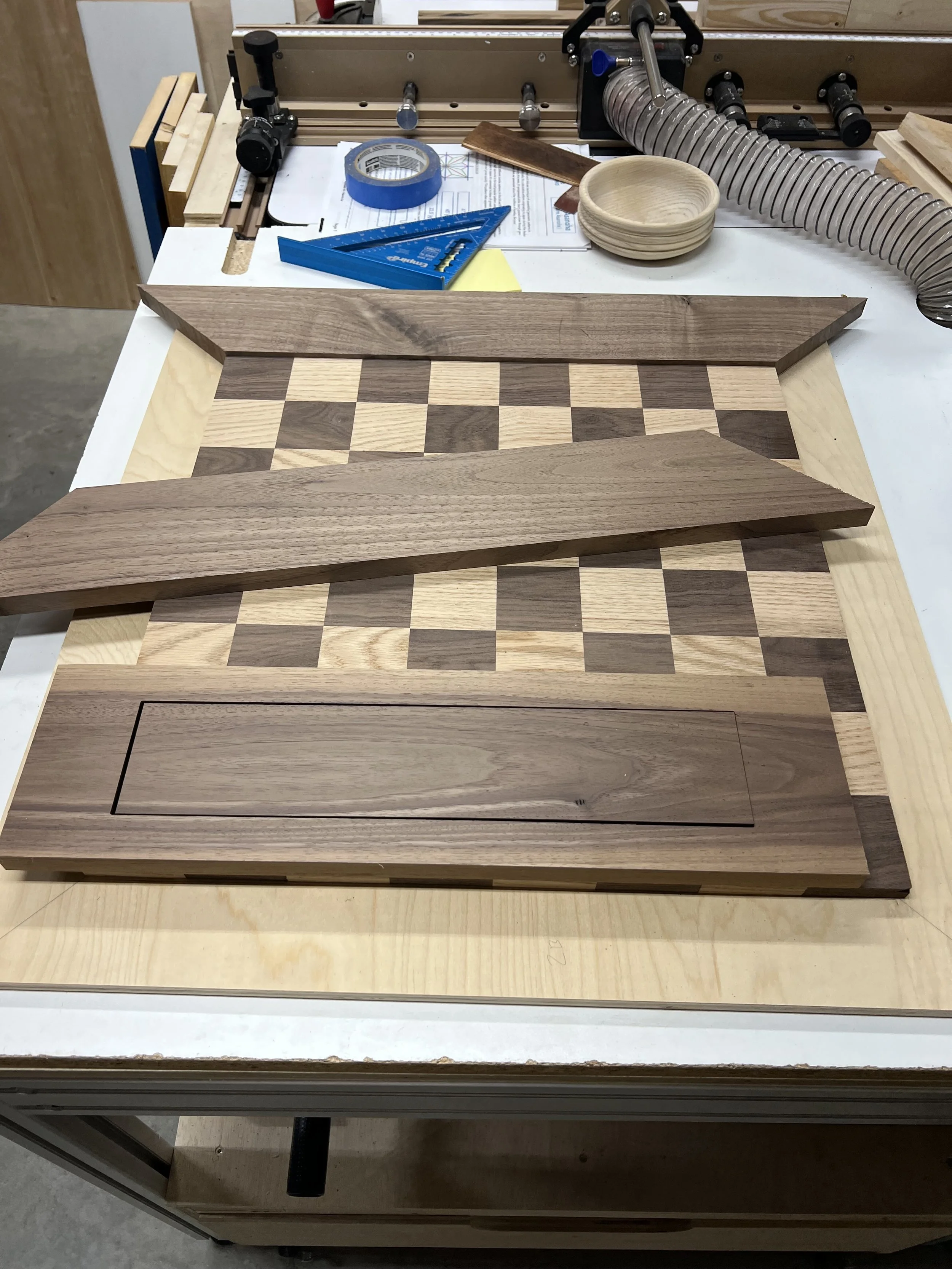
Templates help us get consistent results over time
Afterburner Success Partners
http://absuccesspartners.com/
What’s in it for me?
If you want to get ahead in life, if you want to achieve your dreams and live your best life, you must take meaningful, deliberate action that follows a proven path. Getting ahead in business and your career is about learning what to do and then doing it over time. Learn the culture, have a mentor, and have a plan.
Call to Action
Just. Do. Something. Make a decision on what you want or need to do, define the path, and get after it. Do it today.
Recommended Resources
See notes below for either of my books.
Up Next
Completing the professional goals template
Notes
Please note that as an Amazon Affiliate, I may earn a small commission on the sale of any of these recommended resources.
Cambridge Dictionary
Oxford Language Dictionary
Achieve Your Dreams: A Complete Guide to Live Your Best Life, by David Giustozzi: https://amzn.to/3IxEFgy
Everyday Cooking for Everyday People Like Us, by David Giustozzi: https://amzn.to/437OhVQ