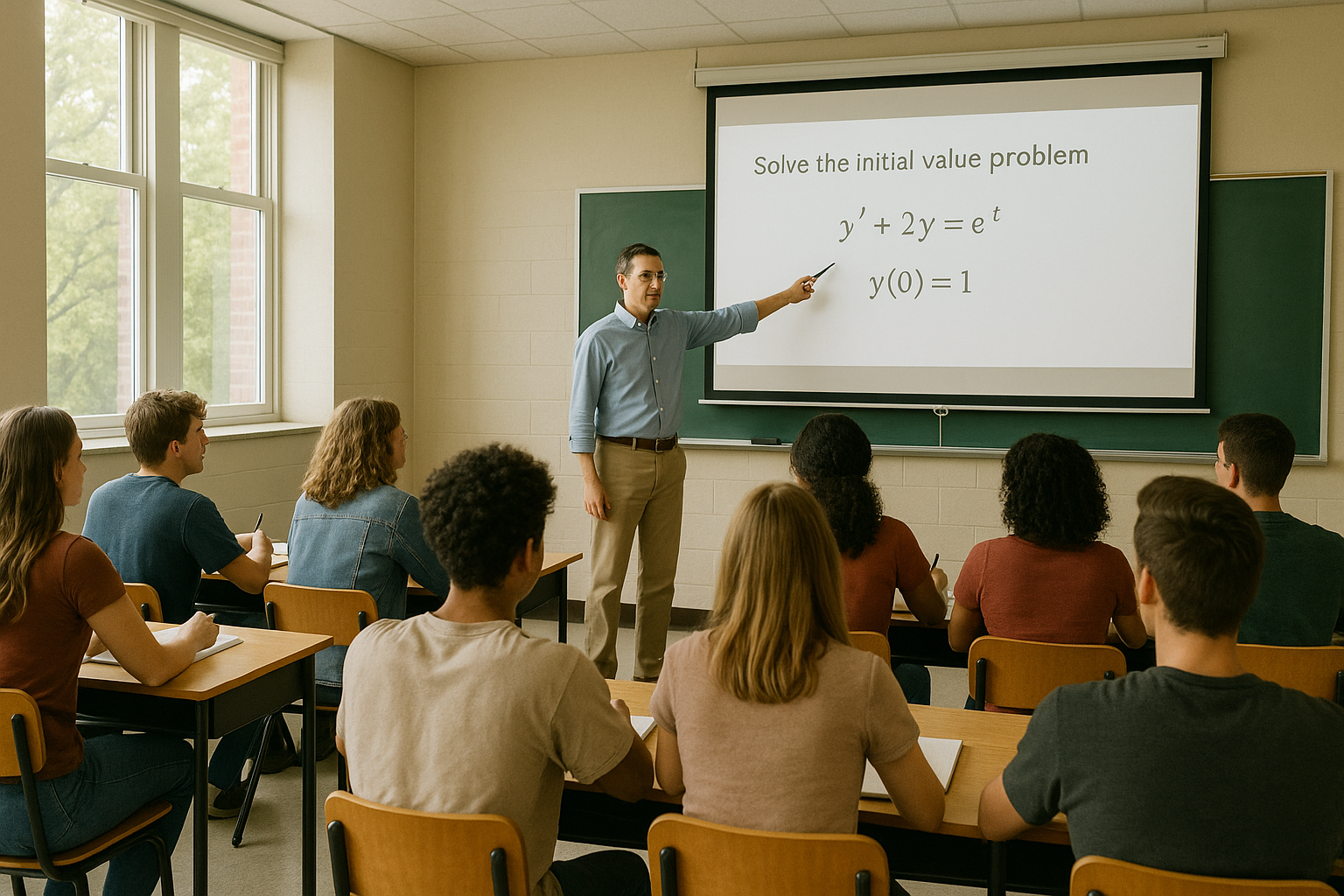
Today we are going to learn about pedagogy and andragogy. The difference between how children and adults learn. You did know there is a difference, right?
Introduction
The goal at Afterburner Success Partners is to help you learn how to achieve your dreams and live your best life. To be successful, one of the things we (that’s me as the instructor and you as the student) must understand is the process of learning. If we understand this process, we can employ effective learning strategies so that students can better comprehend the material and achieve better outcomes.
The learning process for children is different from that for adults. You likely inherently get that without me needing to state it, but just to set the baseline, I’ve felt led to do so. Because this program is geared primarily toward adults, we need to employ a strategy that is most effective for adults.
Afterburner Success Partners is for anyone who wants to change and improve
This raises the question of who this program is geared toward. Frankly, it’s geared to anyone who wants to improve or change their lot in life. OK, so you may not have heard the term “lot in life,” so let me somewhat define it for you. Your “lot in life” essentially is the kind of life you have, coupled with your experiences. This means, again, something you inherently know: that each of us is different and unique because of our situation, circumstances, fortune, or other reasons why we are where we are at this point in time.
Another term you may or may not have heard is your “station in life.” This is often thought of in terms of social rank, occupation, or wealth. The problem is these terms are often slung around with what seem to be negative connotations or manners. What are some examples of that? “Well, I just have to accept that is my lot in life.” “My station in life is not where I can do the things I would like to do.” NO, NO, and NO!!! Never, ever accept that you are where you are and cannot change or improve yourself! I absolutely refuse to accept that kind of thinking or talk! Sheesh…
If I were to pick the ideal student (Note 1) for this class, he or she would be a 22-year-old just graduating from college who can secure a well-paying job and generate enough income to fully fund all their needs. We will talk more about human needs later in the program.
The fact of the matter is that not even I fit into this category, and very few potential
Afterburner Success Partners students will ever fit into this category.
That is why I say we take you where you are and build upon the foundation you have laid for yourself. We will discuss your starting point a little later in the program, so please be patient until then.
OK then, none of us are “the perfect student”; we are all flawed in some way and unique based on our upbringing and life experiences. But we all have the capacity to change and improve. That is the foundation on which Afterburner Success Partners and the course are built. OK, now that we’ve got that out of the way, let’s talk about how we learn.
How children learn
I mentioned earlier that children learn differently than adults. This art of teaching children is referred to as pedagogy theory. This simply means the art, science, or profession of teaching, typically used in terms of teaching children. This is what you would expect primary school teachers to learn when completing an education degree. If you consider your child’s education, we conclude that children typically rely on others to decide what they need to be taught, accept what is taught as being true, and have very little or no experience to draw on. This is why you often hear that children are “sponges” or “like putty in our hands” and they have an almost infinite ability to learn. This is why it is very important what children are taught, and you can see how this could potentially go very badly unless the adults are well-intentioned.
How adults learn
Adult education, on the other hand, is often referred to as andragogy, the theory of teaching adults. Learning as adults is a bit harder because we have more life experience, we don’t necessarily accept everything at face value, and we get to choose what we learn. How many of us took a foreign language in school? I took two years of Spanish in high school, remember almost nothing about it, and if I wanted to study it again as an adult, I don’t know that I could even do it. Can you relate?
I mentioned in an earlier post that I am a fan and follower of Jim Stovall (https://www.jimstovall.com ). In his June 20, 2024, weekly newsletter, he discussed that many of us spend too much time worrying about what everyone thinks. He goes on to cite two examples: The first, he says, is suppose he is speaking in public and invites the adults in the room to join him on stage where they will be asked to sing or dance. As we can imagine, there will be few takers. He states that this is because, as adults, we are aware of others' opinions and often do not wish to embarrass ourselves. If he made the same offer to a group of six- and seven-year-olds, he reckoned he would have a stage full of volunteers. The reason is that young children are not concerned about their self-image and only know that singing and dancing are fun and would want to participate.
In the same manner, unlike a child who goes to school every day because an adult tells him or her they must, as an adult, we have choices. We can choose not to sing and dance on stage. Or, if you chose to take this course to improve your lot in life, your station in life, I’m going to assume, based on research done on this subject, that you have decided to learn this material because you see value in it, you have experiences that tell you learning it will be good for you, and you are motivated to be successful.
I’ve spent many years in learning environments. I spent a lot of time in Air Force learning environments. I spent seven years in formal education, earning several degrees. Later, I worked closely with corporate training departments at work, evaluating their effectiveness, and then, after retirement, I substitute taught at a local technical college. I have worked with job seekers through Tulsa OJT (https://ojttulsa.org). Why am I telling you this? Simply because, as adults, if you have decided to learn, you will be able to. Now, feel free to take the issue of “I can’t do it” off your plate; you can do it!
Ways to teach, ways to learn
There are many ways to teach and learn. For example, some people are auditory learners; that is, they best learn by hearing. Others are visual; they see and learn, and then others are tactile learners; they touch and learn. Material can also be presented in different forms. There is self-learning, in which students learn on their own through reading, for example. There is self-paced, instructor-assisted learning in which resources can be provided online, and students can proceed at their own pace, seeking assistance only when needed. There is computer-based training (CBT, an old term), which means students learn at their own pace from material that is online or in other formats, accessed at will by the student. There is video learning, such as YouTube. This is an excellent form of education because we get to see what is happening. Virtual learning involves students and instructors interacting over a distance. There is instructor-led training, which is excellent, as it allows for live interaction between students and the teacher, as well as among students. I think the best training method is a combination of instructor-led and hands-on, or On-The-Job (OJT), training, where a student learns in the classroom and then demonstrates proficiency by performing the task. All of these different kinds of training can and are useful when used in the correct application.
At ASP, several methods are offered. We can be together in a classroom, virtually via Zoom, or you can take the course on your phone, tablet, or computer in small, bite-sized pieces. Very soon, you will be able to purchase a book and take the course in that form.
Here are some of the concepts employed at ASP to maximize the effectiveness of this training:
I am passionate and energetic about this subject, and I hope that rubs off on you.
You will be positively encouraged every step of the way.
I provide external resource materials, such as books, blogs, and videos, to make learning enjoyable and stimulating (Note 2).
If we are in person, there is a lot of opportunity for class interaction. We have some opportunity virtually, just not as much. We can all learn from each other and our life experiences.
I tell a lot of stories so you can relate. Stories are a great way to learn and make the material personal.
People tend to remember things in 3’s. Think Snap, Crackle, Pop. I try to apply this concept as much as possible throughout the course.
The course is broken up into manageable, logical sections. I encourage taking time to consider and reflect upon each section before proceeding to the next. Thinking about (pondering), sleeping, and discussing with others are great ways to ensure we are making the best decisions.
I use repetition to drive the point home.
I ask a lot of questions to get you thinking and keep you engaged.
If we are going to be among the few that actually experience happiness and success, then we need to stack the deck in our favor. We do that by learning as much as we can about the tools that can help us.
How to overcome and win, even after being defeated
My daughter was a competitive softball player when she was growing up. We competed in many tournaments where a loss would send our team to the loser’s bracket. Because the tournaments were typically double-elimination, it was always possible for a team that had lost to come back and win the tournament. We got a second chance. And sometimes they did come back! If you were fortunate to watch the 2024 College Women’s Softball World Series, you will see exactly what I mean. The University of Oklahoma Sooners, expected to dominate the World Series, lost and were bumped into the loser’s bracket. What did they do? They came out swinging, recovered, and won their fourth consecutive World Series. That’s what winners do: they overcome difficult odds and succeed anyway.
And so, it is with life. Perhaps you feel like you, or someone you know, have ended up in the loser’s bracket for whatever reason. You, or they, need a second chance. I want to provide one. I’d like to make you aware of a few psychological issues (tools) that can either help you or hinder you. Don’t get caught up in the fact that these are fancy words and phrases. My purpose in bringing them up is to make you aware of them so that if you are struggling, you don’t feel like you can’t do it. You can overcome it! You can succeed!! Here they are:
The Pygmalion Effect is an expectation by yourself or someone else such as a teacher or manager that you will succeed, you will have improved performance or results. In other words, having positive expectations can become a self-fulfilling prophecy in and of itself.
Conversely, the Golam effect is one in which superiors, or even yourself, have low expectations or even an expectation that you will fail. Again, this effect can become a self-fulfilling prophecy as well if we let it.
Learned optimism is the ability to believe good things can happen and there are things you can do to improve your life. Learned optimism can even improve your health!
Learned helplessness typically occurs when a person has experienced repeated challenges and then believes they have no control over the situation and is helpless to improve.
If you see yourself in either of these positive phrases, congratulations! If you see yourself in either of the negative ones, think about, then act upon, what you need to do to get out of those places.
Finally, I’d like to leave you with two nuggets to ponder over. The first one comes from a fortune cookie I got one time. It simply says, “You cannot teach a person anything. You can only help them to discover it within themselves.” The second is an old Buddhist saying: “When the student is ready, the teacher will come.”
That’s all for this week!
Let’s help our friends and loved ones, shall we?
If you find the information in this post useful or enjoyable, please forward it to those you care about.
Then, simply say, “Search the internet for Afterburner Success Partners
to learn how to achieve your dreams and live your best life!”
What’s in it for Me
Following these posts and taking the class sets you on a path to financial security and professional achievement and provides a way to achieve your dreams and live your best life. What’s not to like?
Call to Action
Sign up for the online course. Ensure you are signed up for the email list. Forward this email to your friends and family. Consider that no matter where you are in life, you can change, learn, and improve. What things do you need to change? What do you need to learn? What improvements do you need to make in your life today? Take the next step to improve yourself by signing up for the course and setting your life's path!
Recommended Resources
The resources for the next two weeks will focus on habits. Successful people have habits, routines, and ways to do things that work. And they stick with them until they find better ways. For example, Toyota became a powerhouse automotive manufacturer by employing what they call the Toyota Production System (Note 3). TPS has 14 principles they have built the company on. Click on the link below to learn more. The classic book about developing and employing good habits is author Steven Covey’s The 7 Habits of Highly Effective People. If you want to learn how to be successful, then you need to read this book, it’s the gold standard in good habits (Note 4).
Up Next
What the class is and is not. Dreams and goals, goals and dreams.
Notes
This is a repost of the original blog post 9 of a 106-post series for the Afterburner Success Partners course, numbered 9A for clarity, and may be updated with any new information. Original posts are available in full and in order of publication on the website under the Blog tab, starting with the oldest post.
Please note that as an Amazon Affiliate, I may earn a small commission on the sale of any of these recommended resources.
I hope you can get comfortable with the term student; to me, it means anyone open to learning. I am still a student myself and have set a daily goal to “learn one new thing every day.”
When I was in the Air Force, we used to have a monthly assembly that was called Commander’s Call where we were briefed by the Commander on material we needed to know. Each one of these sessions began with a film called Air Force Now, which was a wonderful motivational film designed to engage us and stress the importance of our mission. I love these types of things and use them throughout the course.
The Toyota Way by Jeffery Liker: https://amzn.to/4eJ599Q
The 7 Habits of Highly Effective People by Steven Covey: https://amzn.to/4h9BB6N
Everyday Cooking for Everyday People Like Us, by David Giustozzi: https://amzn.to/437OhVQ
Achieve Your Dreams: A Complete Guide to Live Your Best Life by David Giustozzi: https://amzn.to/3IxEFgy