
Overcoming Failure
Failure means you need an alternative in case things don’t work out as you initially planned. Just like the soldiers on June 6, 1944. D-Day.
Introduction
In just a few days, we will have the anniversary of D-Day, June 6, 1944. How appropriate that I can tie this week’s post to that epic day.
Last week, we watched three videos about failure. I hope you watched them, anyway, and I suggest watching them now if you did not. They are only a few minutes and well worth your time. Besides discussing famous failures, the videos stated that we should fail forward, not look backward. However, I might argue that, as responsible adults, we need to be prepared “just in case” things do NOT go as we planned. Think of planning for a tornado or traffic on the drive to work. We think it will all work out, but let’s plan, just in case. I’ve always believed we should have a plan “B.”I just look at it as good planning. Ideally, your Plan” B” is something you do along the way, not something totally different. I’ll give you an example in a bit.
Snatching victory from the jaws of defeat
Last year, just about this time, in early June, just before the Anniversary of D-Day, we visited France. Paris was amazing, but I think the highlight of the trip for me was visiting Normandy and seeing where D-Day, Operation Overlord, was fought. While ultimately successful in achieving its core objectives, the invasion faced chaos, missed landings, heavy causalities and failure to reach immediate goals, I’m not going to spend a lot of time on it now, but I want you to think about something for a few minutes as it is a textbook example for what we are talking about with our own lifetime goals. That something is that things do not always go as planned, and when they don’t, you have to make adjustments, often on the fly in the thick of battle. We all need to have a Plan B.
The picture you see attached to this post is one I took of Omaha Beach when we were there on May 23, 2025, just two weeks before the anniversary. Omaha Beach was one of the five beaches where the Americans and their allies landed that day, June 6, 1944. Omaha Beach had the highest casualty rate among the five landings at Utah, Omaha, Gold, Juno, and Sword beaches. Of 10,300 casualties over the course of the D-Day invasion, 2.300 occurred at Omaha Beach out of a total of 34,000 American troops that landed that day.
As you look at the picture, the challenge of landing and attacking on that beach becomes evident. The landing, delayed two days due to bad weather, took place at low tide at 6:30 in the morning, about an hour after the lowest water level, and was designed to take advantage of a narrow window as the tide rose for the troops to clear beach hazards (steel structures called hedgehogs) that had been placed there by the Germans and designed to damage landing craft hulls and light tanks. And while the American strategy was sound, as you can see, it left a very long beach, which gave the enemy an advantage by exposing the soldiers.
Oh, and in case you did not know, many of the soldiers were sick from the bad weather and the fact of going into battle. Many vomited in the landing craft. Imagine how bad that can be to be sick from two days of bad weather, having to be in a confined landing craft with others getting sick around you, and then having to land on a beach and fight and avoid being killed. Add to that the scene of their fellow soldiers being mowed down on the beach, and it causes you to wonder how they were able to overcome at all. If you are able to go there, visit any or all of the several American-focused museums in the area. They say it takes about four days to see and experience Normandy properly. The initial battlefield coastline itself stretches 50 miles long so that gives you some idea of what you would be in for.
One of the things that is really impressive is that reporters were able to interview some of the soldiers who participated in the battle years later, and listening to their stories and seeing them on camera is really something. This is how I learned about the soldiers being sick.
It would be easy to say, early in the battle, that they had failed. But with dogged persistence, they prevailed. It was very difficult, but with courage, only a soldier in battle can grasp; they did their job, and thus began the liberation of Europe.
They literally snatched victory from the jaws of defeat. They overcame what looked like certain failure.
When our plans go awry
Unless we have been soldiers in battle, we can never really understand overcoming such desperate odds. However, we can use this battlefield analogy to help us when we get stuck in our lives. I’d like to give you an example of what I’ve been talking about up to this point, having a Plan B that is incorporated into your Plan A, your master plan. I’ll use my own life to illustrate the point.
When I joined the Air Force and decided to go to school, technical school initially, I first sought training as an aircraft mechanic. For several years, I was an aircraft mechanic, an aircraft maintenance technician, and that was all I wanted to be. It was my Plan A. After completing that training, while still a technician, I pursued additional education in management and leadership to advance into leadership, which I did. This change in direction replaced my original Plan A. If I had ever lost my job in management, my new Plan A, I could always go back to being a technician, because the pay and benefits would be enough to support my family. Building my plan “B” was actually part of my long-term plan “A”.
We live in a suburban home, and we enjoy watching a lot of wildlife in our yard, A surprising amount given we are in a developed neighborhood. We have birds, squirrels, rabbits, and an occasional raccoon or opossum. We also have foxes, owls, hawks, and falcons, and even, on rare occasions, coyotes. And you know what this group of animals is doing, don’t you? While the birds look for worms, seeds, and berries, the squirrels hunt acorns, and the rabbits nibble on my grass, they all have one thing in common: They are constantly on the lookout for danger in the form of an owl, hawk, falcon, fox, coyote, or even a human. While their primary plan is to forage for food, they are constantly on alert to implement their secondary plan, their Plan B (running and hiding) if needed on a second’s notice.
How to implement your Plan B
When (not if) we fail in our primary plan, we just don’t admit defeat. No way! We get up, dust ourselves off, and attack the problem. Here are seven steps that should help you get back on your feet:
Be sure YOU have built a strong foundation. Do you have the training and skills you need to move forward? Something I often see in my volunteer work with Overcoming Job Transition (OJT) is people who have been in the same job for a long time. Now that they are forced to get back in the work world, many have found that things have changed over time, and their skills and training may not be up to date. This is a good place to start.
Don’t blame others, own YOUR failure. Yes, suffering job loss or other failures means we all, as humans, must go through the five stages of grief (Note 1). Blaming others is a losing proposition. Even if you were “done wrong,” it does not matter, and being bitter or angry only hurts you. If you find yourself needing a new job, this attitude comes through to everyone around you and you will suffer for it. Own it and get over it.
Change YOUR mindset. Just like outdated skills, outdated mindsets and closed minds, stuck in the past, do us no good. Things change, and we must as well. Remember that the only constant in life is change.
Seek input from others. This is where your mentor, family, professional acquaintances, and excellent network come into play. Remember that networking is a lifetime activity. Plan out YOUR strategy. I can’t tell you how many plans I’ve seen fail because people go off half-cocked without a well-thought-out plan. Better to take a bit more time on the early end to plan well. Remember what Abraham Lincoln said, “If I had an hour to chop down a tree, I'd spend the first 45 minutes sharpening my axe.”
Be decisive AND act. Once you decide, then act with confidence and purpose. Do you remember the 14 Principles of the Toyota Way? Number 13 reads: Make decisions slowly by consensus, thoroughly considering all options; implement decisions rapidly.
Learn from YOUR mistakes. Remember the words of George Santayana from 1905: “Those who cannot remember the past are condemned to repeat it.”
Summary
So, all of this is to say you should expect setbacks along the way, don’t let them derail your plans, but anticipate them and be prepared when they come. Most importantly, keep your head up as you power through them! Often, you will find they really are what I call “backhanded blessings”, that is, blessings you never would have thought could come from events such as this.
That’s all for this week!
Let’s help our friends and loved ones, shall we?
If you find the information in this post useful or enjoyable, please forward it to those you care about.
Then, simply say, “Search the internet for Afterburner Success Partners
to learn how to achieve your dreams and live your best life!”
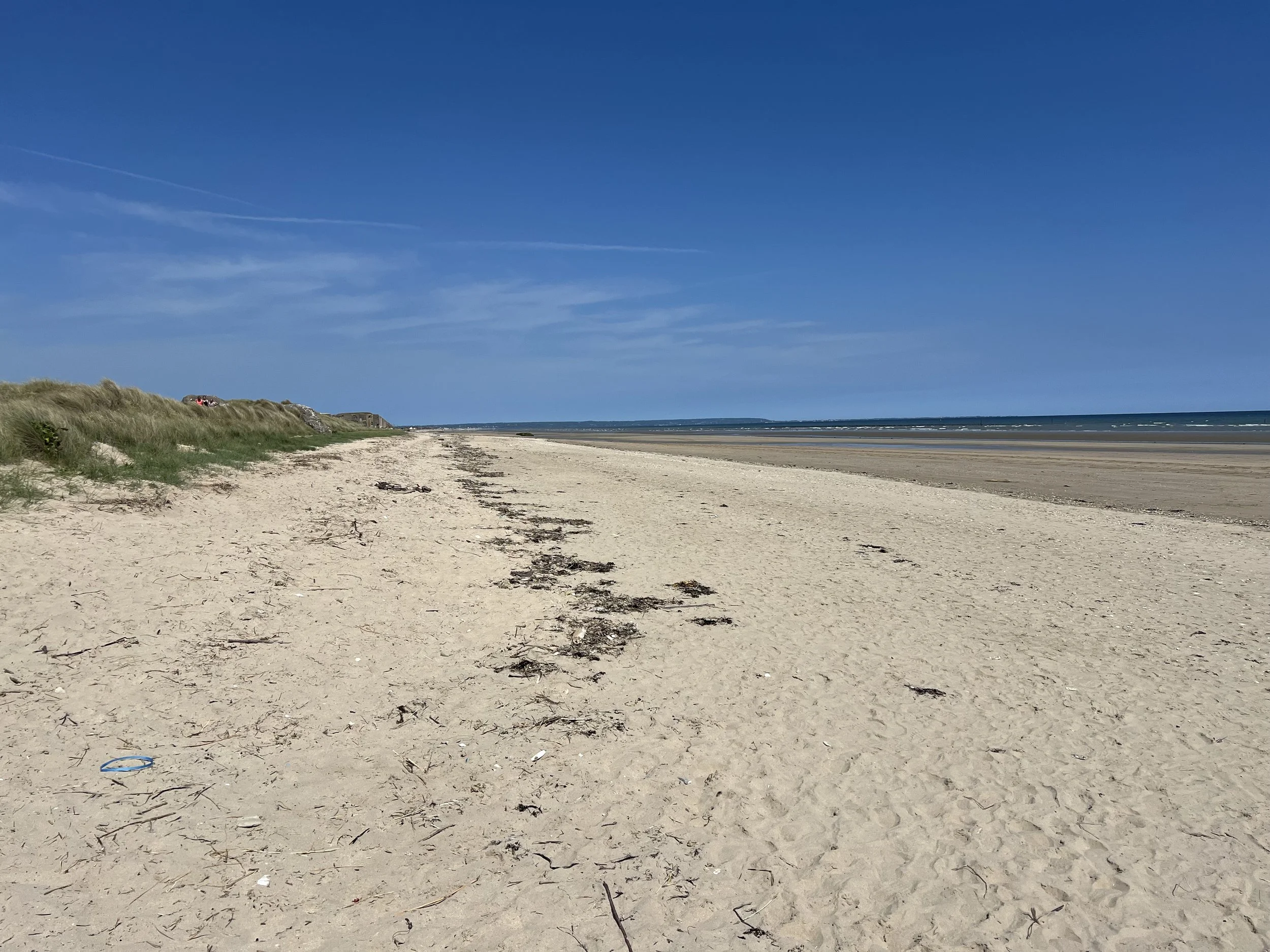
Omaha Beach, Normandy, France
Afterburner Success Partners
http://absuccesspartners.com/
What’s in it for me?
If you want to get ahead in life, if you want to achieve your dreams and live your best life, you must take meaningful, deliberate action that follows a proven path. Getting ahead is about learning what to do and then doing it over time.
Call to Action
Just. Do. Something. Make a decision on what you want or need to do, define the path, and get after it. Do it today.
Recommended Resources
See notes below for either of my books.
Up Next
When should I implement my plan?
Notes
Please note that as an Amazon Affiliate, I may earn a small commission on the sale of any of these recommended resources.
How to deal with grief and loss, The Jed Foundation: https://jedfoundation.org/resource/how-to-deal-with-grief-and-loss/?gad_source=1&gad_campaignid=14475590587&gbraid=0AAAAADNORRrRvfYGlqvHl61NDaaG7_cw3&gclid=CjwKCAiAtq_NBhA_EiwA78nNWHhnfvBp10UIc5y7MFcpFNuX2s0jiGRxPr4KhfxiELybE5tO8unmwxoCznkQAvD_BwE
Achieve Your Dreams: A Complete Guide to Live Your Best Life, by David Giustozzi: https://amzn.to/3IxEFgy
Everyday Cooking for Everyday People Like Us, by David Giustozzi: https://amzn.to/437OhVQ